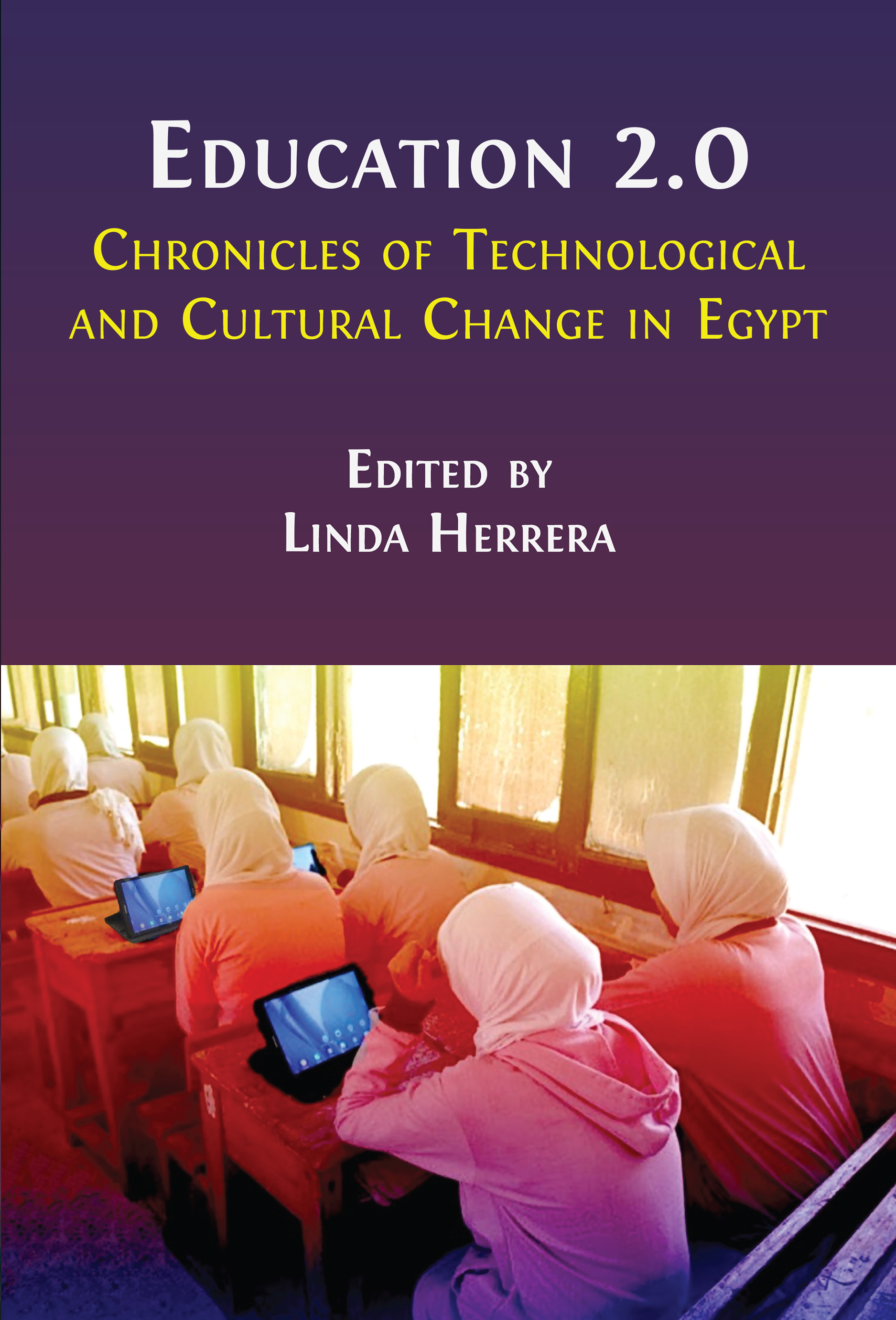
23. Digital Transformation and the Changing EdTech Landscape
in Egypt
Hany Zayed
©2025 Hany Zayed, CC BY-NC 4.0 https://doi.org/10.11647/OBP.0489.23
Abstract
This chapter reviews the digital transformation of Egyptian education at the two levels of the state and private markets. The state is expanding the digital infrastructure, incorporating digital devices, digital assessments, digital content, and digital learning platforms into the K-12 years. At the same time, the private sector is expanding an unregulated EdTech ecosystem exponentially. It poses the questions: How is Egyptian public education being digitalized and who are the main architects of this process? How is this digitalization spurring a private and unregulated EdTech landscape with new players, scope, and rules? What happens when the state and private markets come into contact, coincide, and collide? The chapter raises broader questions about digital educational futures, the risks of individualization and edutainment, the dangers of datafication and surveillance, and the transformation of, and assault on, educational institutions and roles.
Keywords
digital future, educational television, edtech, edutainment, individualization, platforms
1. Egypt 2.0: Building a New Digital Republic
At the end of 2018, the average internet speed in Egypt was 5.6 megabits per second and Egypt ranked 40th out of 43 African nations… Today [in 2022], the average internet speed is 41 megabits per second and Egypt ranks first among all African nations.
Amr Talaat, Minister of Communication, and Information Technology1
Since 2018, the Government of Egypt has been tirelessly working to realize its ambitions for a ‘New Digital Egypt’. With roots in the Constitution of 2014 and the Sustainable Development Strategy of 2016,2 this digital transformation project has been central to the vision for the New Egyptian Republic (al-gumhuriyya al-gadida) which began soon after President Abdel Fatah El-Sisi assumed office in 2014 (El-Sisi 2021). This far-reaching and deep-seated project with its aim to ‘usher [a] transition to a digital society and build a strong digital economy’ (MCIT 2021a and 2021b), entails digitalizing governmental operations and citizen services, forging an entrepreneurial ecosystem that encourages digital innovation and creativity, and raising the digital skills of Egyptians (Egyptian Cabinet 2020, Ghoneim 2021: 13, Talaat 2021).
Enormous resources have been directed from the national budget to enhance the state’s digital infrastructure. Between 2019 and 2021, the state invested sixty billion Egyptian pounds to amplify its fixed Internet speed by a factor of eight. As the opening quote shows, this increase catapulted Egypt from the fortieth position amongst African nations to the first (Egyptian Presidency 2022, MCIT 2022b). In addition, the state is set to invest a further forty billion Egyptian pounds in the coming three years (2023-2025) to connect more than four thousand villages, three million households, and almost sixty million citizens with affordable high-speed Internet (MCIT 2022c, Talaat 2021). To monitor this growing digital system, the state created the Supreme Council for the Digital Society (SCDS) in June 2015. It oversees and regulates policymaking with regards to state-digitalization (Official Gazette 2015a, 2015b, and 2022).3
Within this context, this chapter asks three key questions pertaining to the state, markets, and the future. First, how is Egyptian public education being digitalized and who are the main architects of this process? Second, how is this digitalization spurring a private and unregulated EdTech landscape with new players, scope, and rules? Third, what happens when public forces of the state and private forces of the market come in contact, coincide, and collide? What are the broader implications and urgent concerns emerging from this digitalization with regards to digital educational futures?
2. The Digital Transformation of Egyptian Public Education
The Egyptian Prime Minister Mostafa Madbouly (appointed 2018) announced that two main elements were needed to craft a New Egyptian Citizen and ensure readiness for the future labor market, namely ‘building the technical capabilities of young people… and developing the Education System’ (Madbouly 2022). To implement this vision, the President appointed Dr. Tarek Shawki as Minister of Education and Technical Education (MOETE) in February 2017. Believing that ‘education is one of the central pillars for manufacturing awareness and building the Egyptian person’, Shawki laid the groundwork for an advanced New Education System for all citizens where digital transformation was a key component (Shawki 2021f). With this educational overhaul, not only would Egypt improve its international competitiveness and rankings, but it would also bring education ‘back to its glory days’ (Shawki 2021l). Shawki described the digital transformation of Egyptian education as no less than an ‘Egyptian epic’ and a ‘revolution’ (Shawki 2019).
Many people were involved in the digital transformation of Egyptian public education, but two chief architects stand out: Dr. Tarek Shawki, the Minister of Education and Technical Education (2017-2022) who provided the vision; and Dr. Ahmed Daher, the Deputy Minister of Education for Information Technology and Digital Learning (2019-present, as of 2025), who provided the technical knowhow.4 ‘From the moment we thought about bringing technology in’, Shawki recalled, ‘Daher and I struggled, and this struggle would be worthy of a television series’ (Shawki 2021d).
Both Shawki (on the level of vision) and Daher (on the level of implementation) harbored techno-solutionist dispositions, the idea that technology can fix complex social problems (Morozov 2013: 5-6). They often approached complex educational issues as ‘engineering problem[s]’ with technical and computable solutions (Shawki 2022). Not only would those technological solutions ‘fix’ education, but the thinking was that they would ‘transform’ educational governance, learning, and pedagogic practices. While celebrated by some in the government and the technology industry, Shawki was vilified by many in the educational community including students, parents, teachers, and education leaders. In contrast, Daher maintained a discreet presence. He labored quietly to operationalize Shawki’s visions. In so doing, he enjoyed less fame and less public scrutiny.
Supported by a 500-million-dollar loan from the World Bank (2018),5 the digital transformation of Egyptian public education involved connecting general secondary schools via fiber optic cables and providing them with Internet connectivity; distributing tablets to secondary students and teachers; installing smartboards in secondary classrooms; administering digital assessments; and provisioning digital content and digital learning platforms. This form of digital transformation was oriented towards personalized and individualized self-directed learning, or ‘self-reliance’. As Shawki intoned, ‘Students need to know how to teach themselves’ (2021c). It also embraced principles of ‘edutainment’ whereby learning was to be both fun and enjoyable. As David Buckingham (2007: 35) puts it, edutainment represents ‘a hybrid mix of education and entertainment that relies heavily on visual material, on narrative or game-like formats, and on more informal, less didactic styles of address’ (see also Okan 2003). In this sense, edutainment is a precursor of the gamification of education, the ‘use of game design elements in non-game contexts’ (Deterding et al. 2011).
The digital transformation of Egyptian public education rested on setting up a robust digital infrastructure that connected schools, classrooms, students, teachers, and the MOETE (see Fig. 23.1).

Fig. 23.1 The Digital Transformation of Egyptian Public Education, graphic by Hany Zayed.
Connecting schools cost five to six billion Egyptian pounds (Shawki 2021a) and was implemented in collaboration with government and private corporate entities. It involved connecting around 2,500 public general secondary schools in Egypt’s twenty-seven governorates with fiber optic cables for high speed WiFi Internet; installing servers, storage, and firewalls in IT data rooms (Fiber Misr 2018), and installing security cameras in classrooms (Al-Hekaya 2021). To overcome persistent digital divides among the student population, the MOETE provided subsidized SIM Cards for students for out-of-school data connectivity. Even with these efforts, ‘universal school connectivity’ has remained a work in progress. In some rural and mountainous areas, connectivity is fragmented and uneven at best.6
Between September 2018 and 2020 alone, the MOETE equipped close to forty thousand public general secondary classrooms with Promethean ActivPanels for use in teaching and learning, and around thirty-six thousand smartboards were fitted in public general secondary classrooms (MOETE 2021, Shawki 2020b, 2020c). In early 2022, the government announced the inauguration of a Promethean manufacturing plant to supply its local needs of ActivPanels (Prime Ministry 2022, Yehia 2022a). Notably, the MOETE distributed Samsung tablets free of charge to almost two million students and seventy five thousand teachers. Through their unique serial numbers, those tablets were tracked to their users. ‘We know what they [students] are doing and what they are watching’, Shawki cautioned (Al-Hekaya 2021). The Ministry was able to push their own applications, or simply turn the tablet ‘into a brick’, as Daher put it (see Chapter 18 in this volume). In March 2022, the MOETE announced the inauguration of a Samsung manufacturing plant. The tablets produced in the country would be used both to supply local needs, and also be designated for an export market (MCIT 2022a, Saleh et al. 2022).
The digital infrastructure which included tablets and smartboards for education were important for three purposes. First, they were critical for creating, administering, and marking new digital assessments which relied on new forms of questions that measured understanding, application, and analysis of learning outcomes as opposed to rote memorization (Shawki 2021i, 2021j, 2021k). Second, they were critical for providing digital content, including digitalized textbooks, instructional videos, interactive questions, practice exercises, and audio files, available on the Egyptian Knowledge Bank’s (EKB) Learning Management System (LMS) (Shawki 2021a, 2021g, 2021h).7 Finally, they were critical for accessing digital learning platforms launched by the MOETE. In addition to the EKB, those included eight platforms launched during the COVID-19 pandemic to facilitate remote and hybrid learning, Study.EKB, Edmodo, Edu Stream, Virtual Streaming Classes, Thanaweya.net, Egyptian Education Platform (Eduhub), Hesas Masr, and Madrasetna (see Fig. 23.2).

Fig. 23.2 Timeline of Public Digital Learning Platforms from 2016-2020, graphic by Hany Zayed.
This massive investment in digital infrastructure, devices, assessment, content, and platforms, paved the way for two critical and interrelated projects: the Digital Transformation of the MOETE, and the Digital Identity Project. The former, entailed connecting all governorates, administrative districts, directorates, and schools with the Ministry by way of digitalizing administrative processes associated with schools and collecting, storing, and organizing individual-level data about students, teachers, and assets. Building on this, the Digital Identity Project (DIP) records and stores data about students (such as educational attainment, attendance, tablet access and usage, personality traits and health status), teachers (such as training and job performance, personality traits, loyalty and belonging), and schools (such as number of classes and teachers, maintenance, class densities and technological infrastructure) in central and secured databases. This data, much of which is attached to Microsoft Email credentials, was not only about ‘surveillance’ and ‘monitoring’ (Al-Hekaya 2021), as the Minister affirmed, but was supposed to improve governance, decision-making, and efficiency.8
3. Charting Egypt’s Nascent EdTech Ecosystem
Egypt’s digital transformation served as the catalyst for a nascent private EdTech ecosystem that is lucrative, ad-hoc, unregulated, and does not operate according to a set of firmly established rules or norms (see Fig. 23.3).

Fig. 23.3 Overview of Egypt’s private EdTech landscape, graphic by Hany Zayed.
Egyptian EdTech, with its expanded scope, new players and supporters, and changing business models, appears to be the new frontier for investment. Egypt’s blooming EdTech landscape now includes Pre-K, K-12, and higher education. It covers both public and private education, formal and informal education, and comprises institutional, continuous, and lifelong learning. According to Holon IQ, a prominent market research firm concerned with global EdTech, Egyptian EdTech subsectors include Tutoring and Test Preparation, Workforce and Skills Management, Digital Content and Educational Resources, Education Management Systems, Games and Simulation, Online Learning, Advanced Technologies (AI/AR), Massive Open Online Courses (MOOCs), Language Learning, and Career Planning and Mentoring (Holon IQ 2022a).
Egypt’s nascent EdTech ecosystem and EdTech startups9 include small and medium enterprises (SMEs), private schools, private tutoring centers, extracurricular book publishers, national companies, and transnational corporations. Many EdTech entrepreneurs rely on the support of ‘ecosystem builders,’ a burgeoning network of actors that include Venture Capital Firms, Angel Investors, Incubators, and Accelerators from both the public and private sectors.10 Those provide financial investments in emerging EdTech companies and non-financial support like idea generation coaching, business plan writing, and investor matching.11 Holon IQ came to play an outsized role in Egypt’s EdTech ecosystem (see Holon IQ 2022c and 2024). In addition to directing entrepreneurs and startups to growing and profitable EdTech fields (for example, Artificial Intelligence), Holon IQ’s insights are directing major tech-corporations and edu-businesses to promising EdTech domains (to be penetrated) and companies (to be acquired). Finally, they direct investors, such as venture capital firms and angel investors to particular EdTech fields and startups.
For example, since 2021, Holon IQ has been directing its gaze to, and producing market intelligence on, EdTech in the Middle East and North Africa, including Egypt (see Fig. 23.4). In 2022, they chose Cairo as the location for their 2022 Global Impact Summit in the MENA region,12 signaling the importance and promise of Egypt as a frontier market in EdTech. Since 2021, Nahdet Misr’s (established in 1938) EdTech-focused Venture Capital arm EdVentures has also been collaborating with Holon IQ and using their market insights to identify gaps in Egypt’s EdTech market. With those insights, EdVentures exhorted entrepreneurs and startups in late 2022 to direct their efforts, i.e. their investments, to ‘untapped’ and lucrative opportunities areas including Artificial Intelligence (AI), Augmented Reality (AR), and Pre-K digital platforms. EdVentures promised financial and non-financial support in case entrepreneurs and startups followed their direction. In this sense, Holon IQ functioned as a ‘market maker’, as Ben Williamson put it. It ‘mobilized data-driven technology platforms to assess the market value of educational technology companies, and support venture capital to invest in products with high predicted future value’ (Williamson 202: 3).
With more than sixty million Egyptians under thirty years (around 61% of the population), and twenty-eight million students in pre-tertiary and higher education (around 28% of the population), Egypt’s private education represents a titanic market with significant return on investment potential (CAPMAS 2022a, 2022b). To get a sense of the enormity of this market, in 2020 Egyptian households spent almost fifty billion Egyptian Pounds on private tutoring and exam preparations in pre-tertiary education alone (EIPR 2021, Gamal 2021, Raslan 2020: 110). Importantly, this profit potential was bolstered with the COVID-19 pandemic. As Hatem Sallam, partner in Almentor Education, a leading private EdTech company puts it, with the coronavirus pandemic, ‘the level of acceptance of blended and e-learning changed 180 degrees and became a matter of fact’. It was no longer a matter of if education technologies would be used, but a matter of how (Sallam 2020).
To realize this profit potential, EdTech companies, with the help of their supporters, adopted a variety of business models different from ‘traditional’ private education. Whereas ‘traditional’ private education involved a simple monetary exchange between two or three parties (for example, students/parents, teachers and/or private tutoring centers), private EdTech players are making money through direct monetary transfers (informal payments between students and teachers), subscriptions (periodical payments for access to a digital learning platform), freemium models (where part of the educational content is free and part paid), and advertisements (where student data is monetized and sold to third parties for targeted advertisements). Yet, those business models are neither mutually exclusive nor fixed. Many players in the space rely on more than one revenue stream. They are constantly ‘pivoting’ their business models to pursue more profitable endeavors.
Crucially, those new revenue generating schemes seem to be operating outside the gaze of the state.

Fig. 23.4 Holon IQ’s 2024 Middle East and North Africa EdTech 50, 10 December 2024, https://www.holoniq.com/notes/2024-middle-east-north-africa-edtech-50
The role of the Egyptian state in the private EdTech landscape has not been straightforward. On the one hand, through the Ministry of Communication and Information Technology (MCIT), the state has been laying the ground for the digital education market by providing digital infrastructure, passing regulations, enacting strategies, imparting students across levels with digital skills, and supporting entrepreneurs and startups. On the other hand, through the MOETE, the state has been supervising and overseeing (trans)national private EdTech companies formally contracted for its own digitalization needs. Those include, for example, Pearson in digital assessment, Discovery in digital content, and Almentor in digital platforms. Beyond those, the state does not seem invested in, nor have the bandwidth, to regulate private digital pedagogical spaces or the actors occupying them. This means that the state is not regulating EdTech companies who have direct commercial relations with students, parents, and teachers (Business to Consumer), or those with direct commercial relations with schools, private tutoring centers and other businesses (Business to Business). In fact, MOETE officials expressed pleasure that those companies were teaching students how to use devices, imparting them with twenty-first-century digital skills, and forcing them to learn online on their own. The state is also not regulating ecosystem builders who provide (non)financial support to those companies, like venture capital firms. In other words, in this nascent ecosystem, EdTech players and their supporters are operating in a free, uninhibited environment that lacks oversight, accountability, and responsibility.
4. Reimagining Digital Education Futures
With Egyptian education teetering on the cusp of major changes as a result of unrestrained digitalization, a number of critical issues and urgent concerns have emerged. The first pertains to the purpose of education. From the state’s perspective, the digitalization of public education would produce a ‘New Egyptian Citizen’, a skillful, innovative, competitive, responsible, independent person who is passionate about technology and ready for the Fourth Industrial Revolution. This new citizen would lead the New Digital Republic and contribute to its economic development and modernization. On the other hand, through their different platforms and ‘solutions,’ private EdTech companies claim to impart students with twenty-first-century skills necessary for the future labor market. Other players, such as EdVentures, go a step further by claiming their venture capital efforts support Egypt’s economic development. In short, with the digitalization of education, the economic imperative of education becomes cemented.
In addition to the ‘why’ of education, both the MOETE and private EdTech market are aligned in the ‘how’. To attain its economic ends, EdTech initiatives, whether inititiated by the public or private sectors, integrate principles of individualization and edutainment/gamification. The MOETE launched platforms with more personalized, individualized, and gamified learning modalities and called for more ‘self-reliance’ in education. ‘Out of all of those [platform] options’, Shawki (2021b) states, ‘every student will find something that fits them and is comfortable for them’. This celebratory approach to individualization and gamification begs certain questions.
First, individualization views students as self-interested and self-managing. It assumes that they have the requisite judgement, willingness, knowledge, motivation, and ability to freely and entrepreneurially choose among resources, teach themselves, and cultivate skills for the job market (Selwyn 2016a, 2016b, Selwyn 2017: 150-151). Individualization shifts responsibility from the state, the school, the teacher, and broader structures to the student. Importantly, this individualization changes the role of the teacher to a mere facilitator or coach. Second, for almost four decades, scholars have been raising concerns about edutainment and gamification, heavily criticizing the lack of empirical evidence for their claims. As far back as 1985, Neil Postman cautioned against the idea of seeing learning as ‘a form of entertainment or, more precisely, that anything worth learning can take the form of an entertainment, and ought to’ (Postman 1985: 154). More recently, scholars have pointed to the empirical vacuity of edutainment, their techno-utopian thrust, their limited advantages, and their long term harmful effects (Okan 2003). As Jarvin (2015: 34-35) argues, edutainment is better suited for ‘learning and memorizing facts’, engaging in ‘lower order thinking skills’ and raising awareness. Egypt’s case raises concerns with regard to modelling learning and pedagogy on social media platforms like TikTok. Education risks becoming about the ‘user experience’. The Ministry of Education will be acting more like the Ministry of Edutainment and the Netflix and TikTok of Education.
With individualization and gamification, Egypt’s far-reaching and deep-seated educational digitalization raises additional issues regarding surveillance and datafication—the production, capture and usage of immense amounts of data. On the one hand, through digital devices, assessments, content, platforms, and its Digital Identity Project, the state is able to amass massive amounts of student data pertaining to tablets usage, learning platform engagement, school attendance, learning outcomes attainment, students’ health, psychology, and grade achievement, to name a few. As Shawki intoned, the digitalization efforts were ‘not surveillance, only monitoring’ (Al-Hekaya 2021). Even though the MOETE refrains from calling it surveillance and maintains that it is for improving governance and decision making, every step of students’ education is increasingly being monitored by the state. On the other hand, students’ engagement with private EdTech platforms is also producing copious amounts of data that are used to improve user experience as well as being sold to third party data brokers and monetized to advertisers. Together, those twin processes of digitalization and datafication sound the alarm about the invasive tracking of students who are leaving steep data footprints. Coupled with a weak regulatory framework, they raise questions about the amplification of state and commercial dataveillance, the ethics and ends of data collection, storage, ownership, and usage, the efficacy of cyber security efforts, the production of the ‘datafied child’ (Lupton and Williamson 2017: 780) and the infringement on their (digital) rights, both by public and private entities.
The influx of private commercial providers in Egyptian digital education spaces means that they are not only embedded in, and profiting from, the education infrastructure, but they are also critical in reshaping educational practices and reimagining educational futures. One site of contention is the school. While Ahmed Daher maintained that ‘the school is the foundation for the educational process and the teacher is the main element’ (Madrasetna 2022), a prominent private EdTech player challenged this official vision, positing that,
My personal dream is to see in the region, in Egypt, and maybe across the world […] a different vision of education […] We need to get out of the traditional K-12 and University system […with…] a number of students sitting in the same class taking the same material […] No more. We have to think out of this box […]These days we need personalized learning […] We have to change this. We have to break this taboo (Holon IQ 2022b).
This quote was made by Dalia Ibrahim, the CEO of Nahdet Misr Publishing Group (established in 1938) and the founder of EdVentures, a prominent venture capital firm geared towards EdTech entrepreneurs and startups (see Chapter 15 in this volume). Ibrahim espouses skill-based tech-enabled personalized learning journeys with principles of edutainment embedded in them. As she more concisely, and perhaps more ominously, articulated at a session titled ‘Web 3.0 in Education’ in Techne Summit in Alexandria, Egypt (5 November 2022), ‘institutions will fall in the future’. With this vision, education risks moving from state institutions to corporate platforms. It also risks moving from being a public good to a private commodity (see Cone et al. 2021: 3-4; Selwyn 2021; Williamson and Hogan 2020: 8). What is critical (and dangerous) about this particular vision is that it commands a vast armament of discursive and material resources to realize it. In other words, in their ‘disruptive’ visions of digital educational futures, private EdTech players are assaulting traditional notions of education. They are promoting the de facto deinstitutionalization of education, the decentralization of learning, the disemboweling of schools, and the deprofessionalization of teachers and teaching.
This points to a broader issue. A new class of stewards and custodians are driving Egypt’s digital education ecosystem. This class rarely includes members of educational communities, such as teachers or education specialists. Instead, it consists of local and transnational entrepreneurs, startups, technology corporations, edu-businesses, venture capital firms, angel investors, and market intelligence firms mostly working at the nexus of technology and business, not education. Armed with an extreme and unsubstantiated form of techno-utopianism and techno-solutionism, these actors speak in a similar language about what education is (a set of twenty-first-century ‘skills’), what its purpose is (for the labor market), how it should be pursued (through personalized learning and gamification), and the outdated role of traditional institutions (schools) and professional educators (teachers). With sufficient discursive and material resources to reimagine and reshape education, they are capable of effecting a top-down change in education in collaboration with, and sometimes in opposition to, state actors, who are failing to regulate those educational spaces and losing the battle of shaping educational futures.
5. Epilogue
In a sudden cabinet reshuffle in mid-August 2022, Tarek Shawki was replaced as the Minister by his deputy for Teacher Affairs, Dr. Reda Hegazy. Hegazy made it clear that ‘the New Education System will continue because it is the state’s philosophy’ (Abdel-Mo’men 2022). In July 2024, Reda Hegazy was replaced as Minister by Mohamed Abdel Latif. In a session with the Egyptian parliament, Latif assured the body that he was continuing the education priorities as laid out in Egypt Vision 2030 (MOETE 2024). Throughout these changes at the ministerial level, Ahmed Daher remained in his post as Deputy Minister to continue overseeing the digital transformation of Egyptian public education, including the integration of Artificial Intelligence (AI) into schooling and learning (see Chapter 1 in this volume).
6. Bibliography
Abdel-Mo’men, Bishry. 2022. ‘The Biggest Headlines of The Minister Of Education: Transferring Secondary Exams From “Riot Committees”... Electronic Correction... and Unifying the Value of The Class at 20 Pounds’, 30 August, Al Masry Al Youm, https://www.almasryalyoum.com/news/details/2678011
Al-Hekaya. 2021. ‘From Inside the CCTV Thanaweya Monitoring Center’, 12 July, MBC Misr, YouTube, https://www.youtube.com/watch?v=932SY_78sL8
Buckingham, David. 2007. ‘That’s Edutainment: New media, Marketing and Education in the Home’, in Karin M. Ekström and Birgitte Tufte, eds., Children, Media and Consumption on the Front Page (Gothenburg: Nordicom, Göteborg University), pp. 33-46, https://www.diva-portal.org/smash/get/diva2:1534787/FULLTEXT01.pdf
Central Agency for Public Mobilization and Statistics (CAPMAS). 2022a. ‘Number of Students Registered in Higher Education’, https://www.capmas.gov.eg/Pages/IndicatorsPage.aspx?ind=5713
Central Agency for Public Mobilization and Statistics (CAPMAS). 2022b. ‘Egypt in Figures: Population Report’, https://www.capmas.gov.eg/Pages/Publications.aspx?page=5104&Year=23602
Cone, Lucas, Brøgger, Katja, Berghmans, Vanermen, Lanze, et al. 2022. ‘Pandemic Acceleration: Covid-19 and the Emergency Digitalization of European Education’, European Educational Research Journal, 21(5): 845-868, https://doi.org/10.1177/14749041211041793
Egyptian State Information Service (SIS). 2022. ‘Constitution of the Arab Republic of Egypt 2014, as Amended to 2019’, Constitution Net, https://constitutionnet.org/vl/item/egypt-constitution-2014
Daher, Ahmed. 2022. ‘LinkedIn Profile’, LinkedIn, https://www.linkedin.com/in/ahmed-daher-458a102/
Deterding, Sebastian, Dixon, Dan, Khaled, Rilla, and Nacke, Lennart. 2011. ‘From Game Design Elements to Gamefulness: Defining “Gamification”’, in Proceedings of the 15th International Academic MindTrek Conference: Envisioning Future Media Environments (MindTrek ‚11) (New York: Association for Computing Machinery), pp. 9-15, https://doi.org/10.1145/2181037.2181040
Egyptian Cabinet. 2020. ‘Results of the ICT Sector for 2020’, 24 December, Facebook, https://www.facebook.com/EgyptianCabinet/posts/1815322015312822.
Egyptian Initiative for Personal Rights (EIPR). 2021. ‘The Government Ignores the Constitution in the Budget For the Sixth Year. And the Administrative Judiciary Resumes the Lawsuit on Saturday Regarding Spending On Education’, 24 June, EIPR, https://tinyurl.com/ymx5ftv6
Egyptian Presidency. 2022. ‘President Inaugurates Digital Egypt Projects for the Ministry of Communication and Information Technology’, 6 July, YouTube, https://www.youtube.com/watch?v=4lsacwi3mAQ
El-Sisi, Abdel Fatah. 2021. ‘President Abdel-Fattah El-Sisi Attends the Launch of the First Conference of the National Project “A Decent Life”’, 16 July, YouTube, https://www.youtube.com/watch?v=WhmnqWW2sk0
Fiber Misr. 2018. ‘Fiber Misr-Transforming Education–Egypt Journey to the Future’, 28 August, YouTube, https://www.youtube.com/watch?v=sUXcc9MAWHE&list=PLp9lnDbwgpuFN3hpy2EHEL-8KM9wav6g-&index=23
Gamal, Amru. 2021. ‘Egyptian Minister of Education: The State Has Other Priorities and We Need Private Tutoring Money’, 12 October, Al-Jazeera, https://tinyurl.com/52dzyt8h
Ghoneim, Abdel Wahab. 2021. ‘Egypt Digitization: In Alignment with Egypt Vision 2030 for SDGs. Policy Perspective’, Egyptian Cabinet Information and Decision Support Center (IDSC), https://www.studocu.com/row/document/arab-academy-for-science-technology-maritime-transport/accounting-and-financial-reporting/3-egypt-digitalization/56839633
Holon IQ. 2022a. ‘2022 Middle East & North Africa EdTech 50’, 12 November, Holon IQ, https://www.holoniq.com/notes/2022-middle-east-north-africa-edtech-50
Holon IQ. 2022b. ‘HolonIQ Cairo Impact Summit: The Future of Education, Climate & Health’, 12 November, YouTube, https://www.youtube.com/watch?v=kmpJTvRpdPg
Holon IQ. 2022c. ‘Global Impact Taxonomy’, Holon IQ, https://www.holoniq.com/global-impact-taxonomy
Holon IQ. 2024. ‘2024 Middle East and North Africa EdTech 50’, 10 December, Holon IQ, https://www.holoniq.com/notes/2024-middle-east-north-africa-edtech-50
ITIDA and Disrupt Africa. 2022. ‘The Egyptian Startup Ecosystem Report 2021’, Disrupt Africa, https://disrupt-africa.com/egyptian-startup-ecosystem-report-2021/
Jarvin, Linda. 2015. ‘Edutainment, Games, and the Future of Education in A Digital World’, in Elena L. Grigorenko, ed., The Global Context for New Directions for Child and Adolescent Development (NDCAD) (San Francisco, CA: Jossey-Bass), pp. 33-40.
Lupton, Deborah, and Williamson, Ben. 2017. ‘The Datafied Child: The Dataveillance of Children and Implications for Their Rights’, New Media & Society, 19(5): 780-794, https://doi.org/10.1177/1461444816686328
Madbouly, Moustafa. 2022. ‘Signing Ceremony of MoUs between ITIDA, Tech Giants’, 1 December, MCIT, https://www.mcit.gov.eg/en/Webcasts/1/9745/
Madrasetna. 2022. ‘Madrasetna Forum at the Cairo ICT 2022’, 29 November, Cairo ICT.
MAGNiTT and ITIDA. 2022. ‘2021 Egypt Venture Investment Report’, March, MAGNiTT, https://magnitt.com/research/2021-egypt-venture-investment-report-50810
Ministry of Communication and Information Technology (MCIT). 2021a. ‘Digital Egypt’, MCIT, https://mcit.gov.eg/en/Digital_Egypt
Ministry of Communication and Information Technology (MCIT). 2021b. ‘Official Landing Page’, MCIT, https://www.mcit.gov.eg/
Ministry of Communication and Information Technology (MCIT). 2022a. ‘ICT Minister Opens ICT, Post Projects in Beni Suef; Inspects Samsung Tablet Factory MCIT’, 24 January, MCIT, https://mcit.gov.eg/en/Media_Center/Press_Room/Press_Releases/65954
Ministry of Communication and Information Technology (MCIT). 2022b. ‘Egypt Wins Ookla Speedtest Award, Named Fastest Fixed Country in Africa in 2022’, 10 October, MCIT, https://mcit.gov.eg/en/Media_Center/Press_Room/Press_Releases/66527
Ministry of Communication and Information Technology (MCIT). 2022c. ‘MCIT Invests in Information Infrastructure Development’, 22 December, MCIT, https://www.mcit.gov.eg/Upcont/MediaCenter/MCIT%20in%20Press1222202200MCIT_Invest_in_Information_Infrastructure_Developmentc_22122022..pdf
Ministry of Education and Technical Education (MOETE). 2021. Annual Yearbook of Education 2020/2021, https://web.archive.org/web/20230507102137/https://emis.gov.eg/Site%20Content/book/020-021/devolop_2021.html
Ministry of Education and Technical Education (MOETE). 2024. ‘The Minister Of Education Responds to Discussion Requests and Inquiries From Representatives’, 11 November, MOE, https://web.archive.org/web/20241112105331/https://moe.gov.eg//en/what-s-on/news/senate11/
Ministry of Planning, Monitoring and Administrative Reform (MoPMAR). 2016. ‘Sustainable Development Strategy: Egypt Vision 2030’, https://web.archive.org/web/20250301084436/https://arabdevelopmentportal.com/sites/default/files/publication/sds_egypt_vision_2030.pdf
Morozov, Evgeny. 2013. To Save Everything, Click Here: The Folly of Technological Solutionism (New York: PublicAffairs).
Official Gazette. 2015a. Issue 24, 11 June.
Official Gazette. 2015b. Issue 27, 2 July.
Official Gazette. 2022. Issue 42 (A), 24 October.
Okan, Zühal. 2003. ‘Edutainment: Is Learning at Risk?’, British Journal of Educational Technology, 34(3): 255-264.
Postman, Neil. 1985. Amusing ourselves to death: Public Discourse In The Age of Show Business (New York: Penguin).
Prime Ministry. 2022. ‘The Prime Minister Reviews with the Minister of Education the Measures to Develop the Education System in Egypt during the Period (2017-2022)’, 18 February, Facebook, https://www.facebook.com/EgyptianCabinet/posts/340770871426673
Prime Minister, Office of. 2022. ‘Manufacturing Smartboards’, 9 March, Facebook, https://www.facebook.com/EgyptianCabinet/posts/354754836694943.
Raslan, I. 2020. Educational Settlements: The Story of Thanaweya Amma (Cairo: Dar al-Hilal).
Sailer, Michael, and Homner, Lisa. 2020. ‘The Gamification of Learning: A Meta-Analysis’, Educational Psychology Review, 32(1): 77-112.
Saleh, Amira, Yehia, Wafaa, and Al-Sheikh, Omar. 2022. ‘Egypt Enters the Age of Manufacturing Advanced Electronics’, 25 January, Al-Masry Al-Youm, https://www.almasryalyoum.com/news/details/2510822
Sallam, H. 2020. ‘The Impact of Covid-19 on Education Panel - Eduvation Summit 2020’, 29 November, Facebook, https://www.facebook.com/watch/live/?ref=watch_permalink&v=367057524597750
Selwyn, Neil. 2016a. Is Technology Good for Education? (Cambridge and New York: Polity).
Selwyn, Neil. 2016b. ‘The Dystopian Futures’, in Nick Rushby and Daniel W. Surry, eds., The Wiley Handbook of Learning Technology (Malden, MA: Wiley-Blackwell).
Selwyn, Neil. 2017. Education and Technology: Key Issues and Debates, 2nd ed. (London and New York: Bloomsbury Publishing).
Selwyn, Neil. 2021. ‘The Digitization of Education: Tensions and Opportunities (More Questions than Answers)’, Presented at Seminar The Digitalization of Wducation: Premises, Promises and Consequences, Lunds Universitet, 28 May.
Shawki, Tarek. 2019. ‘Minister of Education Dr. Tarek Shawki in an Interview with DMC’, 10 October, YouTube, https://www.youtube.com/watch?v=rTvhp73ghZo
Shawki, Tarek. 2020a. ‘Lessons Learned from Egypt during the Pandemic: Implementing digital technologies to support remote learning and student assessment | Webinar’, 9 July, A Joint OECD-Harvard-HundrED-World Bank Webinar, https://thedocs.worldbank.org/en/doc/826771595269684475-0090022020/original/WebinarresourcesEgyptJuly2020finalv.pdf
Shawki, Tarek. 2020b. ‘Minister of Education Announces the Details of the New Academic Year’, 8 September, Facebook, https://www.facebook.com/watch/live/?v=324909515391125&ref=watch_permalink
Shawki, Tarek. 2020d. Facebook post. 7 December, Facebook, https://www.facebook.com/tshawki/posts/
Shawki, Tarek. 2020d. Facebook post. 7 December, Facebook,
https://www.facebook.com/tshawki/posts/pfbid0UN7KDC2mXLqTSznWHZ3V
DdX6UWfcrz9M5fG2c1Je4io3PfC71xXzWRNrmsYXEFYDl
Shawki, Tarek. 2020e. ‘Cairo Talks - Full Episode’, 7 December, YouTube, https://www.youtube.com/watch?v=a4vlgURE7Zc
Shawki, Tarek. 2021a. ‘Nile TESOL Conference: Digitize. Globalize’, 5 February, Facebook, https://fb.watch/3s_wOa2h6d/
Shawki, Tarek. 2021b. ‘Press Conference Clarification’, 18 February, Facebook, https://fb.watch/3KNOZR2ELl/
Shawki, Tarek. 2021c. ‘Mummies Group: Special Episode with the Minister of Education to Answer Questions about Education and Examinations’, 20 February, YouTube, https://www.youtube.com/watch?v=t9wyhr3w6HY
Shawki, Tarek. 2021d. ‘Formal Opening Session: World Education Summit 2021’, 25 March, Facebook, https://www.facebook.com/Sayegh1944/videos/798124751087199/
Shawki, Tarek. 2021e. ‘Minister of Education: We Seek to Cut the Road of Digital Cheating. Thanaweya Amma Exam Will Be Electronic’, 5 April, YouTube, https://www.youtube.com/watch?v=dDzrmZje7Cg
Shawki, Tarek. 2021f. ‘Special Coverage: Dr. Tarek Shawki’s Speech in the Inauguration of the New Secured and Smart Documentation Complex’, 7 April, YouTube, https://www.youtube.com/watch?v=NRdQYuTXomY
Shawki, Tarek. 2021g. ‘Press Conference’, 5 June, Facebook, https://www.facebook.com/egypt.moe/videos/1164251730745731/
Shawki, Tarek. 2021h. ‘The New Educational System and Its Goals and Securing Examinations and All the Details’, 5 June, Facebook, https://www.facebook.com/watch/?v=572136463753240.
Shawki, Tarek. 2021i. ‘Live: Minister of Education Uncovers Assessment of the New Experiment in Thanaweya Amma’, 17 August, Facebook, https://www.facebook.com/watch/live/?ref=watch_permalink&v=895270981077069
Shawki, Tarek. 2021j. ‘Press Conference: Announcing Thanaweya Amma Results for 2021’, 17 August, Facebook, https://www.facebook.com/egypt.moe/videos/533268304396901/
Shawki, Tarek. 2021k. ‘Tarek Shawki: This Is an Attempt to Save the Generations That Did Not Get a Fair Share of Education’, 17 August, YouTube, https://www.youtube.com/watch?v=RFvbaRRl8tw
Shawki, Tarek. 2021l. ‘Phone Interview with Minister of Education about the Grade 4 Issue’, 9 November, YouTube, https://www.youtube.com/watch?time_continue=2&v=ePaQpoUbEUw&feature=emb_logo
Shawki, Tarek. 2022. LinkedIn Profile. 21 November, LinkedIn, https://www.linkedin.com/in/tarek-shawki-0059025/
Talaat, Amr. 2021. ‘Egypt’s Digital Future: A Conversation with the Egyptian Minister of Communication and Technology’, Woodrow Wilson Center, 12 October, YouTube, https://www.youtube.com/watch?v=daTp2pw-7ko&t=213s
Van Dijck, José. 2014. ‘Datafication, Dataism and Dataveillance: Big Data Between Scientific Paradigm and Ideology’, Surveillance & Society, 12(2): 197-208.
Van Dijck, José. 2021. ‘Seeing the Forest for the Trees: Visualizing Platformization and Its Governance’, New Media & Society 23(9): 2801-2819, https://doi.org/10.1177/1461444820940293.
Van Dijck, José, Poell, Thomas, and De Waal, Martijn. 2018. The Platform Society: Public Values in A Connective World (Oxford: Oxford University Press).
Williamson, Ben. 2021. ‘Meta-Edtech. Learning, Media and Technology’, 46(1): 1-5.
Williamson, Ben, and Hogan, Anna. 2020. ‘Commercialisation and Privatisation in/of Education in the Context of Covid-19’, 15 July, Education International Research, https://www.ei-ie.org/en/item/25251:commercialisation-and-privatisation-inof-education-in-the-context-of-covid-19
World Bank. 2020. ‘World Bank Event: Realizing the Future of Learning Today’, 2 December, World Bank, https://web.archive.org/web/20201201054532/https://live.worldbank.org/realizing-future-learning-today
World Bank. 2018. ‘Supporting Egypt Education Reform Project’ (Loan Agreement between Arab Republic of Egypt and International Bank for Reconstruction and Development), Loan Number 8852-EG, World Bank, https://documents.albankaldawli.org/ar/publication/documents-reports/documentdetail/411101524661654066/official-documents-loan-agreement-for-loan-8852-eg-closing-package
Yehia, Wafaa. 2022a. ‘Hegazy: We Are Continuing to Develop Education and There Is no Turning Back... and Reviewing the Implementation of the Strategy and Implementation Mechanisms’, 27 August, Al Masry Al Youm, https://www.almasryalyoum.com/news/details/2675656
Yehia, Wafaa. 2022b. ‘Arab Manufacturing’ Signs a Contract to Manufacture Smartboards for the Ministry of Education’, Al-Masry Al-Youm, 9 March, https://www.almasryalyoum.com/news/details/2544710
1 In October 2022, Egypt won the Ookla Speedtest Award and was announced the fastest country with fixed Internet speed in Africa (MCIT 2022b).
2 The Constitution of 2014 states that ‘the State shall develop a comprehensive plan to eradicate alphabetical and digital illiteracy among its citizens of all ages’ (Article 25). The SDS proposed ‘building a digital society’, integrating ‘Information Technology into the various sectors of the economy’, and the ‘transformation of Egypt into a global digital hub’ as part of Egypt’s economic development vision (MoPMAR 2016: 44-45, 69-74).
3 In addition to the SCDS, new legislations include the Supreme Council for Cyber security in 2017, the National Payment Council Law of 2017, the law of Combating Information Technology Crimes of 2018, the National Council for the Artificial Intelligence of 2019, and the Data privacy Protection Law of 2020 (Ghoneim 2021).
4 With a doctorate in Computer Engineering from the Egyptian Military Technical College, Ahmed Daher’s professional experience traversed the military, academia, business, technology, and the government. His professional skills oscillated between computer engineering (e.g., cloud computing, artificial intelligence, cyber security, and educational technology), business (e.g., business development, analysis, consulting, planning and strategy), their nexus (e.g., IT strategy and management, and software project management), and technology regulation (e.g., setting the cloud computing standards for Egypt) (Daher 2022).
5 More than half of the World Bank loan ($255 million) has been earmarked for digitalization-related reforms. In particular, $155 million was allocated to assessment reform and digitalization, and 100 million to educational technology, digital infrastructure, and digital learning resources (World Bank 2018:17-23).
6 The coronavirus pandemic vastly accelerated the digital transformation of Egyptian education (Shawki 2020d; 2020e), and forced people to be active players in their learning (World Bank 2020). However, only eleven out of twenty-five million students were able to access its digital platforms. In an attempt to reach this left-out majority, the MOETE launched the Madrasetna Television Channels in October 2020 (Madrasetna 2022) for Grades 4 through 12 (see Chapter 22 in this volume). Madrasetna was intended to be watched by students at home and at schools through the classrooms’ ActivPanels (Madrasetna 2022). In October 2020, the MOETE created the Madrasetna YouTube Channels to share the aired content on social media platforms like Facebook, Instagram, TikTok, and Twitter. In 2022, the MOETE launched ‘Madrasetna Plus’, a mobile application that utilizes principles of edutainment and gamification (Deterding et al. 2011; Sailer and Homner 2020). Madrasetna is becoming not only an ecosystem but also a marketplace that organizes the consumption of public and private educational materials. Madrasetna, in other words, seeks to be both the Netflix and the Amazon of Egyptian education. As a corollary, digitalization also facilitated the commercialization of education where private commercial providers, such as Microsoft, Pearson, and Britannica, were increasingly embedded in public education infrastructure, provision, governance and delivery (Cone et al. 2021: 3-4; Williamson and Hogan 2020: 8). Finally, it enabled the datafication and the dataveillance of education (Lupton and Williamson 2017; Van Dijck 2014).
7 Between February 2019 and November 2020, the EKB LMS had one and a half million registered accounts, close to fifty thousand resources with more than three hundred million views (Shawki 2020a, 2020d, 2020e).
8 For example, it would help identify the skills needed for the job market, improve teacher allocation and training, govern tablet distribution, and map class densities (Shawki 2021f).
9 As of September 2021, Egypt had forty-two active EdTech startups (out of a total of 562 tech startups); the largest share of EdTech startups in the MENA region (Holon IQ 2022a; ITIDA and Disrupt Africa 2022).
10 The Ministry of Communication and Information Technology’s (MCIT) Technology Innovation and Entrepreneurship Center, for instance, supported 7,200 entrepreneurs, 1,300 startups, and helped establish more than 250 startups as of 2021 (MAGNiTT and ITIDA 2022).
11 In 2021, Egypt had thirty-seven active accelerators and incubators (ITIDA and Disrupt Africa 2022).
12 The Global Impact Summit brings together major players in the EdTech field (government, investors, and corporate) in different geographies to discuss EdTech and educational futures.