24. The Learning Journey of a High School Student from the Historic Class of 2021
Linda Herrera and Nairy AbdElShafy
©2025 Linda Herrera & Nairy AbdElShafy, CC BY-NC 4.0 https://doi.org/10.11647/OBP.0489.24
Abstract
Out of roughly 600,000 students who started high school in 2018 when the Education 2.0 reforms were being rolled out, this chapter profiles the learning journey of ‘Laila’ and her friends. It uses a technique of longitudinal oral history research to record three turbulent school years starting with Grade 10 when all students received tablets and the ministry launched multiple digital initiatives, Grade 11 during the COVID-19 pandemic with the school shutdowns, and Grade 12, a year of hybrid schooling and intense preparations for the Thanaweya Amma university entrance exam. Some takeaways are that even as electronic exams were supposed to eliminate cheating, and digital learning platforms were meant to serve as an alternative to private lessons, both remain widespread and have adapted to new technologies. Students often reap real benefits from the digital tools and platforms but still want and value strong teachers and need the in-person time together with classmates and school communities.
Keywords
blended learning, COVID-19, digital platforms, distance-learning, Egypt education reform, Egyptian Knowledge Bank, electronic exams, flipped classroom, private tutoring, tablets
1. Egypt’s Historic Class of 2021
In a press conference on the Thanaweya Amma results for the 2020/2021 academic year, Minister of Education and Technical Education Dr. Tarek Shawki (2017-2022) proclaimed, ‘This year is very special. We consider the Thanaweya Amma class of 2021 a historical one’ (Shawki 2021). This graduating class was the first cohort to start high school under an ambitious reform agenda that included the digital transformation of many aspects of learning and assessment. During the 2018/2019 academic year, the roughly 2,500 public high schools (Grades 10-12) across Egypt were connected to high-speed optic fiber WiFi, in addition to a host of other digital initiatives (see Chapter 23 in this volume). 1 Like his predecessors, the Minister also attempted to tackle the predatory system of private tutoring and the endemic problems of cheating, though those proved more elusive. Unbeknownst to everyone at the time, a global pandemic would strike one year into the reform. It served as an accelerant of digital transformation, but undoubtedly also led to worrying learning loss across much of the population (Biltagy 2022). The Minister, an engineer by training, harbored decidedly techno solutionist tendencies. This refers to the idea that different types of social problems, whether having to do with education, the environment, infrastructure needs, security, and other domains, have a technological solution.2
Out of roughly 600,000 students who started high school in 2018 and made up this historic cohort, we profile the learning journey of a student by the name of ‘Laila’. Her neighbors ‘Mohammed’ and ‘Mai’, siblings in the year below her, often joined the conversation. Through a technique of longitudinal oral history research, with the Education 2.0 reform being the key historical event under investigation, we track Laila’s three year high-school journey.
2. Research with Laila
Laila grew up in a low-income neighborhood on the edge of Cairo. Though the area appears impoverished, it has basic services. Laila’s father used to work as an employee in the telecommunications sector but retired by the time she was in high school. Her mother was a housewife. In 2011 when Laila was nine years old, she started attending the activities of a local NGO working in non-formal education, one of the many initiatives for non-formal education born out of the 25 January Revolution of 2011. One of the authors (Nairy) was a project manager there and got to know Laila and her younger brother. The NGO offered free computer access. Many of the local kids set up Facebook accounts and stopped by regularly to access their social media. It also offered after-school classes including art programs where the kids could express themselves and take on leadership roles. Laila had a sweet and serious disposition and was always reliable. She enjoyed extracurricular activities like crochet, embroidery, and coloring.
The NGO established good relations with the neighborhood and earned a reputation as a trustworthy organization. Laila was a regular at the center through middle school but had less time when she started high school. She had to commute about an hour each way. She said it was worth the effort since the school had a good reputation for a public school. It was stricter and more demanding than her middle school. Unlike many high schools, her school enforced attendance. She had ambitions to go to university to study physiotherapy, a subject she read about at the community library where she also sometimes volunteered. She wanted to work in a profession like physical therapy or teaching physical education. She entered the science section in her high school.
Many of the kids from the NGO friended Nairy on Facebook and they stayed in touch even after they stopped attending the programs. They tagged each other on things related to the NGO and sent each other birthday greetings. When Nairy reached out to this group in 2020 at the start of the pandemic to ask if anyone wanted to participate in a research to document their high school lives, Laila was quick to respond, as did her friends Mohammed ‘Moe’ and Mai (pseudonyms). Since schools had recently closed, students had more time on their hands.
As a research methodology, oral history draws out stories and oral narration around an event or period, which in this case is the first three years of the Education 2.0 reform (2018-2021). We wanted to explore the interplay between structure (the education system) and agency (ways students interact with and navigate the system) (Cole and Knowles 2001; Herrera 2012). While narrative research is often employed to elicit memories and construct events and histories from the past (Masalha 2008, Portelli 1981 and 2009, Ritchie 2003), it can also be used as a means to build a record of how people are navigating and making sense of policies, institutions, and events in the present (Chowdhury 2024; Hall & Barron 2021).
Ideally, oral history interviews should be face-to-face to build personal rapport, read non-verbal communication cues, and share downtime before and after an interview (see Herrera and AbdElShafy 2020). However, due to the pandemic, interviews were conducted remotely, and mainly on Facebook Messenger at the request of the students. Interviews took place monthly and sometimes bi-weekly over one year, and periodically over the succeeding year for a total of twenty-one interviews.3 Nairy already knew the participants’ mothers through her time at the NGO, and they provided consent for their students’ participation in this study. All interviews and communications took place in Arabic.
During the first six months of virtual meetings, conversations followed a similar structure starting with updates, discussions about study patterns, feelings about what was going on at school, and other personal news. Over time, Laila and her friends often took the lead in the conversations. They came to the sessions with topics in mind and asked each other questions. On several occasions, Laila reached out to Nairy via Facebook Messenger to share updates, explain how she came to reconsider a position or practice she had previously talked about, or report a new discovery. Laila struck us as an especially fitting student to profile for this chapter because of her curious, intelligent, and reflective nature. We also considered the fact that as someone with limited financial means and social capital, she had to be especially resourceful in navigating her high school years to achieve her goal of going to university. (For a portrait of a student from the same cohort with a higher social class position, see Chapter 26 in this volume.) We supplement interviews with ministerial communications, news coverage, and reflections of teachers we spoke to during the same period, to provide additional context. As just one person, Laila does not represent a ‘typical’ high school student, but she is not atypical either. Her learning journey can offer insights into how students progressed (or not) through three consequential and unusually turbulent years of high school as the Ministry was trying to implement a ‘new education system’.
3. Grade 10: Digital Transformation of High School
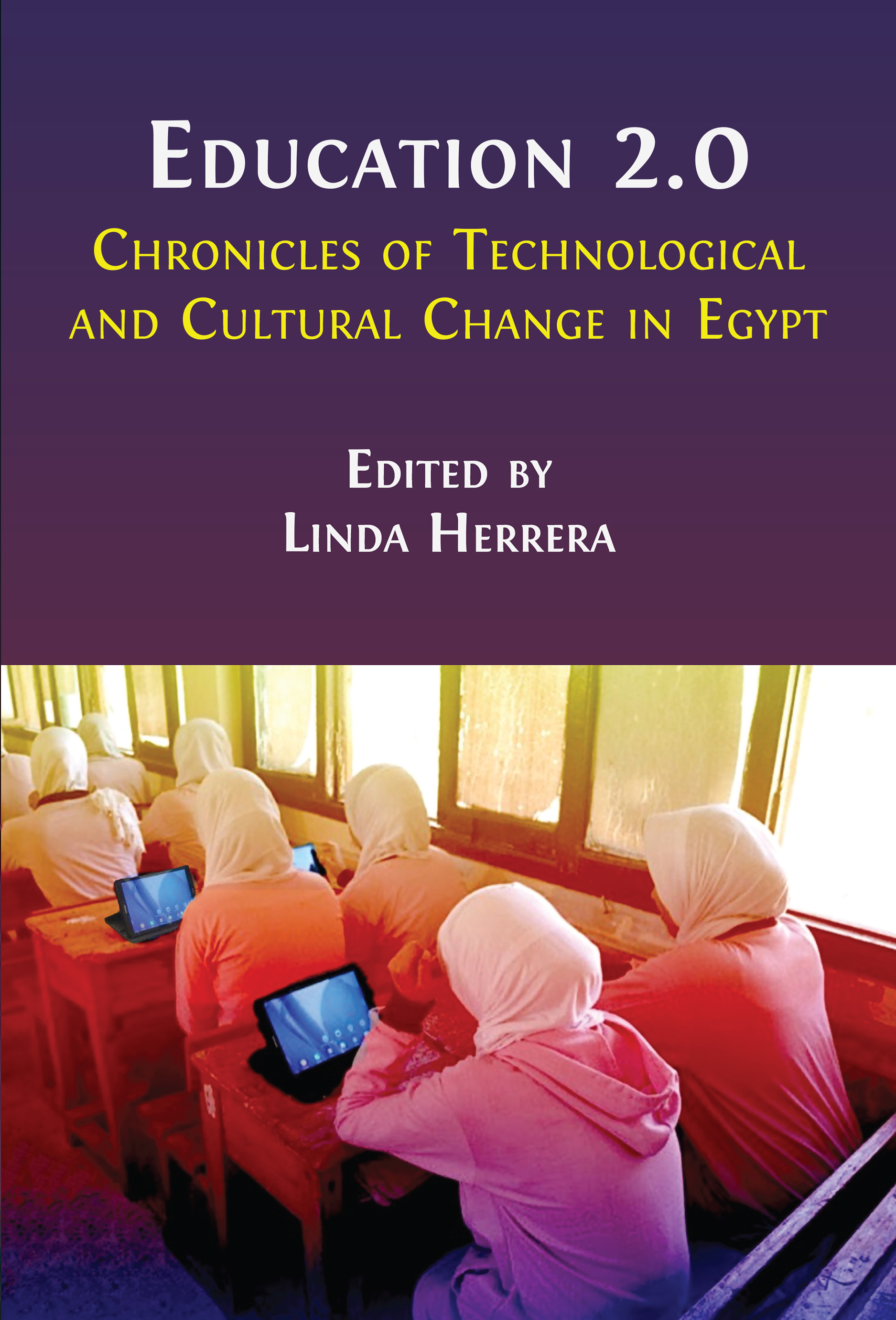
In the lead up to the new academic year of 2018/2019, the biggest education media story by far was about the tablets. Every student entering Grade 10 would be issued a brand-new Samsung tablet at no cost (the cost was to the State as part of a World Bank loan).4 Students were supposed to use the tablet to connect directly to digital resources via the Egyptian Knowledge Bank (EKB) and take electronic open book exams with new kinds of exam questions. As the Minister explained, these questions were ‘scientifically designed to measure different levels of understanding, application and analysis’ (Shawki 2021). The tablet would enable an approach to exams that included voice answers, a written response using the keyboard, or a drawing using the tablet’s pen. Using Artificial Intelligence (AI) and cloud-based services, exams would not be identical but still measure a uniform set of learning outcomes and be at the same level of difficulty (Shawki 2018). The Minister explained that the automated exam system would randomly select questions from the question bank just prior to the exam, making it more difficult to cheat (Shawki 2021). Overall, the tablets were part of a larger goal of the reform to change the culture of learning towards more self-reliance and critical understanding.
The tablets were supposed to arrive at the start of the academic year 2018 in September, yet the full inventory of 750,000 tablets were not available until mid-November.5 When Laila first received her brand-new tablet, she was happy and excited. She called it ‘a fool’s happiness’. She soon realized that it was programmed in a restricted way, and she could not use it for ‘fun things’. Still, she took care of it by keeping it clean and protected. She started having self-doubts about being ‘tablet illiterate’ which caused her stress. A high school teacher who worked with students in the public school system cautioned:
They say that students are technologically smart, but I do not see this. Yes, they can access YouTube and use TikTok better than us. But when I ask them if they can open an email account, or navigate online learning platforms, or use PowerPoint to prepare a presentation, the answer is almost always, ‘No’. They use technology, yes, but they use it for different aims (Public High School Teacher, 2020).6
Laila had trouble accessing digital platforms and downloading the required apps. She did not know where to turn for help and support. Her teachers seemed even less tech-literate and informed about the reform than her classmates. She said,
Our teachers do not know anything about the new tools or their value. There is a lot of uncertainty. They did not receive proper training.
She was frustrated by the lack of technical support at her school and the weak Internet access. Her worries intensified with the approach of the first electronic exams, something totally new for Egypt. The first trial e-exam in biology in March 2019 had serious glitches. Students were supposed to access exam questions online via a server, but the system crashed due to the heavy volume of users, and they could not complete the exam. Laila also experienced technical issues with her tablet. At one point it shut down unexpectedly. When she rebooted it, she found she had lost the question files. A similar situation occurred during the Arabic exam. Due to problems with internet speed, the Minister announced on 18 March 2019 that the Ministry would provide free Internet cards to students (Youssef 2019). Fortunately, these were trial exams and did not count towards students’ final grade. During the more high-stakes exams in May these same problems surfaced in some educational districts, causing the Ministry to resort to paper exams (Al-Masry Al-Youm 2019). Laila worried that students in her year were guinea pigs and that they would pay the price for the government’s lack of preparation for this big push towards digital transformation. She passed the year, but worried that these changes and mishaps would impinge on her goal of getting into the university.
4. Grade 11: Going Remote during COVID-19
Whatever adjustments Laila had to make during Grade 10, they paled in comparison to her second year when everything was eclipsed by the coronavirus pandemic. When schools throughout Egypt closed by government mandate on 15 March 2020, the country, like most of the world, pivoted to distance learning. In a press conference, Dr. Tarek Shawki was quick to point out that the government’s investment in its digital learning infrastructure would serve the country well during this time of crisis. He emphasized three ways the Ministry was working to support pre-tertiary education. First, the entire curricula from KG1 to the Grade 12 was freely available in digital form on the Egyptian Knowledge Bank. Second, in just three days, the Ministry added the free educational technology platform Edmodo, whose interface was similar to Facebook, as the online Learning Management System (LMS). Edmodo (established in 2008) allowed teachers to remotely share content, distribute quizzes and assignments, and manage communication with students, colleagues, and parents. Shawki elaborated that through Edmodo, the Ministry was in the process of establishing virtual classes in 55,000 schools which added up to 6.5 million virtual classes. This network, he explained, ‘will allow the ministry and teachers to communicate with students anywhere in Egypt, support each other, and work collaboratively’ (Shawki 2020a). (Incidentally, in September 2022, Edmodo shut down all its operations. Serious questions emerged about what happened to the abundance of student data on its platform from not only Egypt, but countries around the world.)
Third, for those with difficulty accessing online platforms due to connectivity issues, the Ministry assured the public that all classes would be transmitted via television through the Madrasitna channels (see Chapter 22 in this volume). In subsequent weeks, the Minister introduced additional platforms and services.7 With this plethora of choices, Laila and her friends felt lost and confused about what to do. They scrambled to gather information, whether from Facebook, WhatsApp groups, television shows, or the media at large. They encountered conflicting information. The technology specialist at Laila’s school started a WhatsApp group to provide brief updates about apps students would find on their tablet, and instructions about how to download other apps. Not all the students could figure out how to access the educational television channels, but Laila knew their frequencies and tried to help her classmates.
Previously, Laila had only used the tablet for the mandatory electronic exams and had not even tried to access the EKB. She was constantly afraid she would do something wrong. Several new applications like Webex automatically appeared on her tablet and she did not understand how she was supposed to use them. She could not figure out how to install Edmodo on her tablet, so she accessed it from her cellphone. Two of her teachers of physics and mathematics used Edmodo to update their course content regularly, but Laila felt overwhelmed and stopped checking it. By mid-April, a few weeks into the pandemic, most of Laila’s teachers ‘kind of disappeared’ and she lost contact with her school. She remarked,
You feel that you’re alone. You know? Like those musicians playing while the Titanic was sinking. The ship is sinking, and they continue to play music. I feel a little bit like that.
Within the space of a couple months, frustration turned into apathy, resignation, and boredom. Laila and her friend Mai talked about feeling unmotivated to study, and started to express hopelessness about the future, as illustrated in this exchange:
Laila: I feel like the future is a blob, it has no features. I feel like we are broken to some extent.
Mai: Me too. I feel that I need to change my plans, my goals, my dreams, everything because I am not sure I can reach what I have planned for myself.
At a point Laila snapped out of her state of despair and decided to take control of the situation. She developed a monthly schedule with a detailed daily action plan. She also started to more seriously investigate private tutoring options. Before the pandemic, Laila joined the lessons of one of the star physics’ teacher, but in the ‘budget’ category. This meant she was not in the same room with the teacher but followed the live broadcast of his lesson from a large room in the lesson center where he gave his lessons. When the lesson centers closed due to the pandemic, the physics’ teacher circulated a YouTube video explaining that he would continue his lessons online through a new subscription platform (munasaq). Any student who wanted to access his lessons had to make a payment of 150 EGP per month to the lesson center either in-person or remotely via Vodafone cash. This was just one example of how teachers-entrepreneurs were innovating with new business models during the pandemic.
In April 2020, Laila and her friends struggled with learning ‘research skills’ needed for the new open book tablet- based exams. Laila initially felt overwhelmed by all the platforms. But by May, she started independently exploring different YouTube channels and discovered learning apps which she began using regularly. Within two months she talked about how her research skills were improving and becoming pretty good. She was getting more adept at finding information but still expressed frustration at not getting proper support from her teachers.
As the end-of-year exams were approaching, the Minister announced that due to the pandemic, students in Grades 10 and 11 would take the exam at home on the tablet (Shawki 2020a). Laila’s friend Moe was worried because he lost his tablet pen. During the last e-exam, he tried to write on the tablet with his finger, but that did not work. Laila told him to try using a vegetable, like a carrot or a pepper. This solved the problem.
Most of her friends were having a different kind of conversation. They saw the at-home exams as an open invitation to cheat. Many of them did not see the point in studying. Cheating groups were proliferating via WhatsApp and Telegram, but Laila did not want to take part in the cheating frenzy.8 Instead, she learned about the new exam questions, took the practice tests, and took her exam at home alone as instructed.
The Minister initially saw the take home exams as representing a huge achievement. Over 1.2 million students in Grades 10 and 11 took the e-exams remotely. It soon came to light, however, that there was indeed mass cheating. Consequently, the Ministry decided that it would abandon the remote exams. In the meantime, with Grade 12 and the Thanaweya Amma looming, the Ministry continued to build the digital educational edifice and institutionalize blended learning.
5. Grade 12: Blended Learning and the
Thanaweya Amma
The digital transformation of high school in ‘normal times’ may have taken years for public buy-in, if at all. During the pandemic however, distance and hybrid learning became the default mode of educational delivery for pre-tertiary education in not only Egypt but in countries around the world (Herrera 2022: 197). Egypt was especially well prepared with its digital infrastructure. By the start of the 2020/2021 academic year all students in high school had tablets. The Ministry sponsored several learning platforms and educational television channels. In a press conference to announce the details of the new academic year, Tarek Shawki remarked:
The secondary stage with 1.8 million students is fortunate… They are the luckiest because they have the largest amount of digital content and the educational channels. This year all the secondary students have tablets, all the school classes are equipped with internet, networks and servers…[They have] the Edmodo platform, e-platform, live broadcasting, and educational channels, e-box, e-lessons, Ask a Teacher, great resources. Since they are older and have more to study, we are providing them with many resources (Shawki 2020a).
The MOETE formally made blended learning the default mode in high school. Blended learning combines educational delivery models, most commonly face-to-face on-site learning with synchronous and asynchronous online or analog (in the case of television) learning.9 High school students were supposed to go to school two days per week, but only for ‘non-core’ activities like sports, extra-curricular activities, and homework. For the first time, Egyptian high schools would experiment with the flipped classroom or ‘reverse education’. The flipped classroom concept is essentially when a student watches a video lecture (online or through television) and reads sources on that topic prior to coming to class. The student comes to school to do ‘homework’ with the active help of the teacher and perhaps peers. The method is supposed to lead to more personalized learning. In this scenario, the teacher’s role is changed from ‘presenter of content to learning coach’ (Bergmann and Sams 2012: 27).10
In actuality, Laila did not see anything resembling a flipped classroom at her school. Her teachers used the class time in different ways. One teacher gave traditional lectures and drilled students who repeated what she said. Another teacher used the time to activate the classroom’s smart board and stream videos from the Madrasitna YouTube channel. For the most part, teachers let students use the class period as free time. Laila remarked,
I do not think our teachers have been trained on how to teach us for the new [Thanaweya Amma] questions. They still act like the best way for us to prepare for exams is to memorize everything.
With tablets now in the hands of all high school students, the Ministry stopped printing textbooks. Instead, students were instructed to use their tablets to access digital copies of their books via the Knowledge Bank (Shawki 2020b). The digitization of books frustrated Laila and her friends. When Laila told her friend Moe that she was having trouble downloading the books, he shared screenshots he received from his school’s IT specialist with detailed instructions about how to access the books. She was able to download them to her phone but felt she needed physical copies since she preferred to take notes on printed textbooks and did not know how to edit electronic documents or PDFs. Her phone screen was too small anyway for studying. She thought about printing the textbooks, but that was far too costly.
As a solution, she tried with two classmates to get books from the previous year. They first debated about whether the previous year’s books followed the same curriculum. They kept hearing about the ‘old system’, versus the current ‘new system’ and wanted to make sure the new system did not have a different curriculum. Since she followed the Minister’s communications closely, Laila was pretty sure there was no difference in the curriculum, but only in the style of questions for the Thanaweya Amma (which was the case). Laila discovered that the older textbooks were being sold in the black market and found a place to buy them. She also bought external books. Students had been relying on external study books that provide summaries, study questions, and drills, for decades. The new editions were quick to adapt to the new system by for example, including multiple choice questions and having different levels of questions like those found in the new exam itself.11
Something different for the class of 2021 was that the MOETE provided a variety of study resources. The study platform Hesas Masr supplied drills and study questions for the Thanaweya Amma exam. It received almost two million hits in a very short period prior to the exams. The study guide available on the Knowledge Bank received 1,400,000 views. Over 60,000 people subscribed to the Madrasitna educational channel on YouTube for secondary students. The Minister said, ‘All these resources were accessed by students who learnt something from them. This is very important for us’ (Shawki 2021).12 These Ministry resources competed with a growing market of apps and digital resources.
Laila found the proliferation of digital resources overwhelming. They became a distraction. She did not explore the Ministry’s resources but rather relied on the direction provided by her private tutors. For instance, one of them recommended the popular app Ashtar which she downloaded and used regularly.13 She also watched the YouTube videos of teachers whose channels she followed.
As the year progressed, Laila’s study patterns evolved. For the first few months in the fall term, she was uncomfortable studying with electronic PDF files and preferred physical books and in-person tutors. By the spring term, she had grown more confident with the resources and was letting go of private tutoring for some subjects. Her parents wanted her to stay with in-person tutoring, but she convinced them that since she could rewatch the videos on the lessons whenever she wanted, she did not miss anything. She said,
The world has now changed. The Thanaweya Amma is not like before…. We need to be flexible and adapt to the new situation online. But it is hard to convince my parents of this. They prefer the old way of private lessons. Maybe if they see that a few of my friends are doing the same, they will believe me and feel more comfortable. They will see I am not the only one.
She learned to create folders for each lesson, keeping her comments saved and organized. She became more comfortable locating materials and tutorials online, including troubleshooting advice for the tablet. She learned how to switch languages, how not to refresh the page during an exam, and other things that made for smoother use of the tablet. In the spring term Laila shared a voice note to update us on her new thinking about the digital resources:
I have news I want to share with you. Do you remember at the beginning of the pandemic you asked me if I liked to study online or not and I said ‘No, I need to see and at least talk to the teacher’. And then you asked me later when I started taking some tutoring online and I told you I was getting used to it. I want to tell you that for the past month I have not left the house and have not seen a private teacher. I am doing everything online and on the platforms. I am very comfortable. I just wanted you to know that with experience I have changed my mind. It’s normal for people to change.
In the leadup to the Thanaweya Amma exam, Leila and her classmates experienced an added layer of stress because of the inconsistent messaging by the Ministry. The Minister himself made multiple announcements, each time with different instructions about how the exam would be administered. For instance, first he said the exam would be taken through the tablet. He later announced the exam would be on paper. (This change was supposedly due to an order from the President’s office.) Laila remarked, ‘I did not trust what the Minister said until the day before the exam. On that day, I woke up and checked if there was anything new. Thank God there was nothing. So, I went with the last announcement about having paper exams and being able to bring in our textbooks’. Students were also warned that they would suffer serious consequences if they cheated on the exam. (These warnings apparently went unheeded for many). Laila expected to take her exams in a highly secured environment, but it was not as bad as she imagined. She said,
There were police at the school gate, and they checked our bags. In the exam hall, the rectors were screaming at us all the time. They were very tough but not as bad as people were saying. We thought there would be lots of cameras, but there weren’t any. It was a normal exam hall.
Laila did not take engage in any cheating schemes, though she knew many people who did. Students worked with private tutors, peers, and parents on even more efficient ways to cheat using apps, electronic devices, electronic communication, and social media.
In 2020/2021 the pass rate for the Thanaweya Amma was 74% (Shawki 2021). When Laila got her results of 70%, she was initially depressed because this score was not high enough for her to join the faculty with physiotherapy. Instead, she was assigned to the faculty of agriculture. She considered re-taking her exams but, in the end, decided against it because that would require huge efforts and money. There were no guarantees she would get a higher grade. She thought, ‘There is more to look forward to, and it’s better to put this time and money into investing in the future’. She convinced herself that entering agriculture would be a good path for her. Her father held a party to celebrate her being the first person in the family to go to university.
6. Starting University
Leila is currently (in 2022) a student at the faculty of agriculture and specializes in biotechnology. She is enjoying the program so far. She attends some classes online and comfortably participates in blended learning. She also signed up for extracurricular remote courses in English and Microsoft training. She is proud of her ability to use a variety of online platforms with ease. Her technical skills have steadily improved. She is able to edit electronic documents, work with digital folders, search for and use different apps, and do research online. The tablet, which students were allowed to keep after leaving high school, has proven a valuable tool for university. She added a sim card to it and uses it as a kind of laptop because it has a ‘decent’ screen size. She downloaded WhatsApp and other applications that allow her to watch movies, do her assignments, and take different online courses. She currently has all her university material connected to the tablet. With hindsight, Laila feels that her high school years—despite the frustrations of being subject to many experiments, the uncertainty of the pandemic, anxiety about the new technologies, erratic messaging from the Ministry—prepared her for university and online learning. Looking back, she feels fortunate to have been a member of the historic high school class of 2021.
7. Learning From the Class of 2021: Key Takeaways
While many of Laila’s high school experiences are unique to her, they also provide insights into the wider environment. Her high school learning journey offers five key takeaways.
7.1 Exams and Grades Remain at the Core of the System
The reform started with the intention of ‘transforming’ learning by advancing more critical thinking and self-motivated learning. These goals were supposed to be achieved by providing various digital tools which students could access through the tablet, and by changing the nature of the questions which required critical analysis rather than memorization. In reality, the system remained fixated and almost wholly oriented towards the high stakes Thanaweya Amma exam. Students continued to experience immense levels of pressure and stress throughout their high school years. While they were indeed motivated to finds ways to learn on their own, this was more a result of school closures during a global pandemic than because of the availability of electronic platforms and resources. The erratic messaging from the Ministry further pushed them towards self-reliance and peer-to-peer support. As long as high school remains focused on the Thanaweya Amma exam, endemic problems relating to private lessons and cheating will invariably persist.
7.2 Private Lessons Adapt to New Technologies
The MOETE provided students different alternatives to private lessons through new platforms, digital resources, and video lessons. Some of these services saw a high volume of users, especially in the period leading up to the Thanaweya Amma. At the same time, the private lesson market adapted to the expanding digital infrastructure. Private tutors provided a range of new services including synchronous lessons online, sometimes behind a paywall, and sometimes for free. Students became more skilled at finding free video lessons and other resources. It remains to be seen if parents will embrace the digital platforms as valid spaces for their students to take private lessons, and if these will lead to high results on the Thanaweya Amma.
7.3 Cheating Adapts to New Technologies
The Ministry thought that digitizing aspects of assessment would minimize, and possibly even eliminate, cheating. Except for the Thanaweya Amma which was ultimately administered on paper, assessments were by and large digitized. The tablets were connected to electronic question banks and exams were graded through an automated system. Nevertheless, the culture and practice of cheating among high school students continued and seemed to flourish. The technology will not solve cheating. As long as a high-stakes exam continues to provide the single pathway to university entrance, many students and their families are likely to continue to use any means at their disposal to game the system, including through cheating.
7.4 A Reform Needs a Clear but Nimble Roadmap
In 2018, reforms to high school were rolled out with a high degree of trial and error and without a clear roadmap. The class entering Grade 10 were subject to constant experimentation, sudden changes, and inconsistent messaging. Any new reform will needs to have room for some nimbleness. This point proved abundantly clear during the pandemic. However, without a higher degree of predictability, planning, and consistent messaging and communication, even the best-intentioned reforms can cause students and their families a high degree of pressure and place additional burdens on them.
7.5 Students Acquire Digital Competencies but Still Need Their Teachers
As students became more digitally literate—through peer groups, social media, YouTube tutorials, government and private platforms—they still talked about wishing their teachers could better support and guide them. More systematic research is needed to understand who benefitted from these technologies, which segments of the population were left behind, and what kinds of additional infrastructural and education interventions are needed to strengthen the teaching profession and ensure education upholds its social and civic purpose.
8. Bibliography
Ahram Online. 2018. ‘Egypt to Receive One Million Tablets from Samsung for the Upcoming Academic Year’, September 4, Ahram Online, https://english.ahram.org.eg/News/310782.aspx
Al-Masry Al-Youm. 2019. ‘Electronic Exams Fail Again Across Egypt on Sunday’, 19 May, Egypt Independent, https://www.egyptindependent.com/electronic-exams-fail-again-across-egypt-on-sunday/
Al-Masry Al-Youm. 2020. ‘Coronavirus Haunts Egypt’s School Year’, 12 October, Egypt Independent, https://egyptindependent.com/coronavirus-haunts-egypts-school-year/
Bergmann, Jonathan, and Sams, Aaron. 2012. Flip Your Classroom: Reach Every Student in Every Class Every Day (Eugene, OR: International Society for Technology in Education).
Biltagy, Marwa. 2022. ‘The Effect of COVID-19 on the Egyptian Education System and the Role of Digitalization’, in Es.E. Omran and A. M. Negm, eds., Egypt’s Strategy to Meet the Sustainable Development Goals and Agenda 2030: Researchers’ Contributions. Sustainable Development Goals Series (Cham: Springer), pp. 43-57, https://doi.org/10.1007/978-3-031-10676-7_4
Chowdhury, Indira. 2024. ‘Doing Life-Story Interviews for Institutional Archives: An Inhospitable Landscape’, Oral History, 52(3): 23-34, https://www.ohs.org.uk/wp-content/uploads/2024/08/OHJ-52-3-online.pdf
Cole, Ardra L., and Knowles, Gary J. 2001. Lives in Context: The Art of Life History Research (Lanham, MA: Altamira Press).
Germain, Thomas. 2023. ‘FTC Accuses Defunct Edtech Company Edmodo of Violating Kids’ Privacy’, Gizmodo, 23 May, https://gizmodo.com/ftc-edmodo-edtech-violate-kids-privacy-defunct-1850465696
Graham, C. R. 2013. ‘Emerging Practice and Research in Blended Learning’, in M. G. Moore, ed., Handbook of Distance Education, 3rd ed. (New York: Routledge), pp. 333-350.
Hall, Sarah Marie, Barron, Amy, Browne, Alison L., Ehgartner, Ulrike, Hall, Sarah Marie, Pottinger, Laura, and Ritson, Jonathan (eds.). 2021. ‘Oral Histories and Futures’, in Methods for Change: Impactful Social Science Methodologies for 21st Century Problems (Manchester: University of Manchester), https://research.manchester.ac.uk/en/publications/methods-for-change-impactful-social-science-methodologies-for-21s
Herrera, Linda. 2012. ‘Youth and Citizenship in The Digital Age: A View from Egypt’, Harvard Educational Review, 82(3): 333-353.
Herrera, Linda. 2022. Educating Egypt: Civic Values and Educational Struggles (New York and Cairo: American University in Cairo Press).
Herrera, Linda, and AbdElShafy, Nairy. 2020. ‘Using Oral History to Record Stories of Educational Change During Covid-19’, 17 September, Education 2.0 Research and Documentation Project, https://drive.google.com/file/d/1g9vxjnPbgjt3Ecz32wRO3n3ihiz_Ne_2/view?pli=1
Hill, Phil. 2022. ‘The End of the Road for Edmodo: Egypt, via China’, 17 August, OET On EdTech Newsletter, https://onedtech.philhillaa.com/p/the-end-of-the-road-for-edmodo-egypt-via-china
Masalha, Nur. 2008. ‘Remembering the Palestinian Nakba: Commemoration, Oral History and Narratives of Memory’, Holy Land Studies, 7(2): 123-156.
Means, B., Toyama, Y., Murphy, R., and Baki, M. 2013. ‘The Effectiveness of Online and Blended Learning: A Meta-Analysis of the Empirical Literature’, Teachers College Record, 115(3): 1-47.
Morozov, Evgeny. 2013. To Save Everything, Click Here: The Folly of Technological Solutionism (New York: Public Affairs).
Portelli, Alessandro. 1981. ‘The Peculiarities of Oral History’, History Workshop Journal, 12: 96-107.
Portelli, Alessandro. 2009. ‘What Makes Oral History Different’, in L. D. Giudice, eds., Oral History, Oral Culture, and Italian Americans. Italian and Italian American Studies (New York: Palgrave Macmillan), pp. 21-30, https://doi.org/10.1057/9780230101395_2
PR Newswire. 2020. ‘NetDragon’s Edmodo Chosen as the Designated Online Learning Platform in Egypt for Immediate Nationwide Rollout’, 19 March, Edmodo, https://www.prnewswire.com/news-releases/netdragons-edmodo-chosen-as-the-designated-online-learning-platform-in-egypt-for-immediate-nationwide-rollout-301027328.html
Ritchie, Donald A. 2003. Doing Oral History: A Practical Guide, 2nd Edition (Oxford and New York: Oxford University Press).
Sætra, Henrik Skaug (ed.). 2023. Technology and Sustainable Development: The Promise and Pitfalls of Techno-Solutionism, 1st ed (New York: Routledge).
Shawki, Tarek. 2018. ‘Press Conference with the Minister of Education Dr. Tarek Shawki’, 29 September, eXtra News, YouTube, https://www.youtube.com/watch?v=1XwhNi7BUI0
Shawki, Tarek. 2019. ‘Press Conference’ End of Year Assessments and Digital Resources During Covid-19’, March 19, Facebook, https://www.facebook.com/tshawki/videos/10222860204678325/
Shawki, Tarek. 2020a. ‘Announcing the Details of the New Academic Year 2020-2021’, 8 September, Facebook, https://www.facebook.com/baladtv/videos/324909515391125
Shawki, Tarek. 2020b. ‘Minister of Education: There Are No Books in High School’, from Ahmed Moussa’s show Ala Mustawliti, 16 September, Facebook, https://www.facebook.com/AhmedMoussaEG/videos/3628227553896156/
Shawki, Tarek. 2021. ‘The Question Banks in Egypt Explained’, 9 December, Education 2.0 Research and Documentation Project, YouTube, https://www.youtube.com/watch?v=uIKhCpwVy3E
Shawki, Tarek. 2022. 7 February, Facebook, https://www.facebook.com/egypt.moe/videos/1131586587626686
Tawfeek, Farah. 2018. ‘All Egypt Secondary Students to Get Tablets by Mid-November: Education Minster’, October 23, Egypt Independent, https://egyptindependent.com/all-egypt-secondary-students-to-get-tablets-by-mid-november-education-minster/
World Bank, The. 2018. ‘Supporting Egypt Education Reform Project (P157809)’, https://documents1.worldbank.org/curated/en/099042224092026852/pdf/P15780910a8f2e0da1b3851ac39ed01e612.pdf
World Bank, Harvard, OECD. 2020. ‘Lessons Learned from Egypt during the Pandemic: Implementing Digital Technologies to Support Remote Learning and Student Assessment/Webinar’, 9 July, World Bank Group, https://www.worldbank.org/en/events/2020/07/09/joint-oecd-harvard-hundred-world-bank-webinar-accelerating-modernization-of-education-in-egypt
Youssef, Adham. 2019. ‘Egypt Halts Trial Online Exams after Severe Problems’, 25 March, Daily News Egypt, https://dailynewsegypt.com/2019/03/25/egypt-halts-trial-online-exams-after-severe-problems/
1 The costs of the tablets were largely covered by a World Bank loan of 500 million USD (World Bank, 2018). Egypt’s communication ministry had confirmed that it had procured somewhere between 700,000 and one million tablets from Samsung at a cost of EGP 2.4 billion, roughly EGP 1,400 per tablet ($80) to distribute to all students entering Grade 10 and their (Ahram Online, 2018).
2 Technological solutionism, a term initially coined by Evgeny Morozov (2013) has been the subject of much debate and caution (Saetra 2023).
3 Many thanks to the Education 2.0 Research and Documentation Project team who contributed in multiple ways to this research. Nairy AbdElShafy and Hany Zayed carried out the interviews with Laila and her friends. Heba Shama and Helen Gabrah provided regular feedback and guidance on the interviews, as did the project director Linda Herrera who co-designed and supervised the research from inception to completion. The names of all students used in this chapter are pseudonyms to protect their identity and ensure their anonymity.
4 The five-year World Bank loan ‘Supporting Egypt Education Reform’ was aligned with Egypt’s ‘2030 Vision.’ For more information see https://projects.worldbank.org/en/projects-operations/project-detail/P157809?lang=en
5 The tablets were delivered to schools well into the fall term, each one with its unique serial number and password connected to a specific student or staff.
6 Teacher interview conducted by Nairy AbdElShafy for the Education 2.0 Research and Documentation Project (10 April 2020).
7 See the series of videos of the Education 2.0 Research and Documentation Project YouTube channel (https://www.youtube.com/@education2-Egypt/videos) with Dr. Tarek explaining the details of the new academic year of 2020/2021).
8 The Minister has spoken openly about cheating as a widespread phenomenon. See, for example, Shawki 2022.
9 The blended learning approach started in the early 2000s mainly in higher education settings and with mixed success. See, for example, the work of Graham 2013 and Means et al. 2013.
10 The flipped classroom puts great demands on teachers and requires training. It is not suited to classes with high student numbers (Bergmann and Sams 2012: 6).
11 Laila discovered that certain Ministry textbooks like the Chemistry one, were even better than the external books. Her main challenge was that textbooks were mostly written in essay form. The formatting in the external books with clear titles and bullet points, was easier to navigate. There were pros and cons for each book type, but she could only bring the official ministry book into the exam.
12 The Ministry’s study platforms are available through the MOETE online portal https://web.archive.org/web/20250710112729/https://moe.gov.eg/en
13 The Ashtar app is available on Google Play https://play.google.com/store/apps/details?id=uk.devwork.pathfinder&hl=en&pli=1. It is described in the App store as follows: ‘Accredited by Cognia, one of the largest educational accreditation institutions in the world and with a growing family of over 300K students, parents, and teachers, Ashtar provides you with a personalized and interactive online learning experience for K-12 students. By being a curriculum-based platform, we enable our students to reach their full potential by paving their own way in their studies. Start your online learning journey now from anywhere at any time!’